Category: Blog

Your blog category

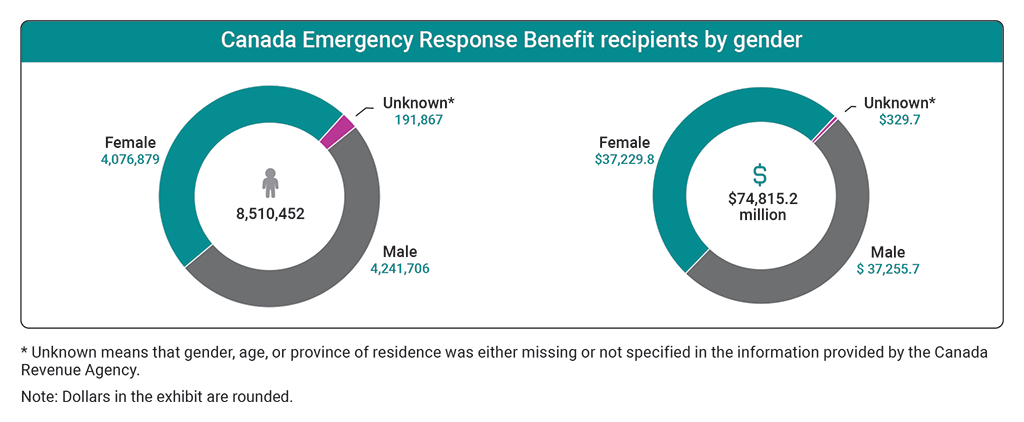
  • How to apply for the Canadian federal government relief package for COVID-19

    How to apply for the Canadian federal government relief package for COVID-19

    These are exceptional days and I pray for the safety of all.

    The federal government has announced a relief package during the COVID-19 pandemic.

    Many do not know about these incentives and even more are looking at how to apply for it.

    Here is information for you if you need it and you can share it with your contacts for their benefit.

    The Globe and Mail writes;

    Anyone looking to apply for the new EI benefits can visit the Employment and Social Development Canada (ESDC) website and follow the five steps.

    1. Gather supporting documents – You must have your records of employment (ROEs), but a medical certificate won’t be necessary for those who have been asked to self-isolate or quarantine. Service Canada advises people to apply right away even if you don’t have these documents as you can send them in later.
    2. Complete the online application– This includes making sure you have: the names and addresses of your employers in the last 52 weeks, the dates employed with each employer and the reasons you’re no longer employed, and personal information including mailing address, Social Insurance Number (SIN), and banking information.
    3. Provide supporting documents- You can visit My Service Canada Account (MSCA) to view ROEs that have been issued to you by past and current employers.
    4. Receive access code by mail – Service Canada will mail you a benefit statement, which includes a 4-digit access code. You need this code and your SIN to get updates about your application and to complete biweekly reports.
    5. Review your application status

    Please call me (416-908-5600) or email me (info@aqmuftirealty.com) if you need any more information.

    You may go to the following URL to read the full article;

  • BOC holds off its rate increase citing Canada’s Inflation falling to 3.8%

    BOC holds off its rate increase citing Canada’s Inflation falling to 3.8%

    BOC holds off its rate increase citing Canada’s Inflation falling to 3.8%

    The Bank of Canada maintains its key interest rate at 5% for October. Here’s an analysis of the key points:

    Interest Rate Hold: The Bank of Canada decided to keep its key interest rate at 5%, indicating its intention to allow previous rate hikes to take full effect. This move is aimed at curbing inflation and maintaining stability in the Canadian economy.

    Inflation Concerns: The central bank expressed concerns about inflation, which has remained elevated. Despite efforts to cool inflation through rate hikes, it remains uncertain, and the progress has been slow. This caution suggests that future rate hikes are still on the table if necessary.

    Economic Growth Forecast: The Bank of Canada predicts weaker economic growth for the remainder of the year, citing various factors such as the Israel-Hamas war’s potential impact on global oil prices and housing supply shortages in Canada. These external factors are contributing to economic uncertainties.

    Inflation Target: While the bank expects inflation to return to its target of 2% by 2025, no specific timeline for rate cuts was mentioned. Economists believe that rate cuts or discussions about them are unlikely in the near future due to persistently high core inflation.

    Rate-Hike Campaign: The bank has been on an aggressive rate-hike campaign since March 2022, increasing the key overnight lending rate from 0.25% to 5%. The aim is to reduce consumer and business spending, thus controlling inflation. The bank is cautious about pausing this campaign to prevent real estate price surges.

    Stagflation Concerns: There are concerns that global economies might be entering a period of stagflation, characterized by a stagnant economy and high inflation. This situation presents challenges for monetary policy.

    Growth Projections: The bank’s October Monetary Policy Report projects weaker growth for Canada, with GDP growth expected to be 1.2% in 2023, 0.9% in 2024, and 2.5% in 2025. These projections have been adjusted downward from previous forecasts.

    Effectiveness of Interest Rate Hikes: The Bank of Canada’s primary tool to combat inflation is interest rate hikes, but the effectiveness of this tool is limited, particularly for external factors like global commodity prices.

    Unemployment and Economic Activity: Bank Governor Tiff Macklem emphasized that despite inflation concerns, Canada’s unemployment rate is below historical norms, indicating that the labour market continues to fuel economic activity.

    In summary, the Bank of Canada is maintaining its key interest rate while keeping a close watch on inflation and its impact on the economy. The future course of action will depend on various economic indicators and external factors.

    If you have any questions or would like to discuss your unique needs and goals, please don’t hesitate to contact me at 416-908-5600. I’m here to help you find the perfect, tailor-made solution.

    If you found this review helpful, I would greatly appreciate it if you could kindly leave a Google Review for my real estate services at

    A. Q. Mufti Google Review

    Thank you for your continued support!

    A. Q. Mufti

    Your Trusted Realtor in Mississauga, Oakville, Milton and beyond.


  • Impact of Anticipated Interest Rate Cuts

    Impact of Anticipated Interest Rate Cuts

    Title: Navigating Economic Shifts: Impact of Anticipated Interest Rate Cuts

    Recent economic projections in Canada indicate a significant shift in expectations regarding the Bank of Canada’s (BoC) stance on interest rates. The envisaged earlier-than-expected rate cuts have sparked a re-evaluation of financial forecasts, especially within the mortgage market.

    Shifts in Economic Forecasts: From Delayed Cuts to Accelerated Timelines

    Previously, economists projected the BoC to delay rate cuts until September. However, a pivotal October job report released on November 3 highlighted weaknesses in the labour market, signalling potential inflationary pressures. This, coupled with other economic indicators, has led most analysts to anticipate BoC rate cuts as early as July 2024, with some even expecting a commencement in April.

    Implications for Mortgage Rates: An Overview of Forecasts

    Forecasts for mortgage rates portray a downward trend, bringing a sigh of relief for borrowers. Projections suggest a decline in average rates for five-year variable mortgages from the current 5.8 percent to 5.4 percent by the end of the next year. Similarly, three-year fixed-rate mortgages are expected to decrease from 5.7 percent to 5.2 percent by 2024.

    Analyzing Projected Rates: Perspective and Context

    Despite these optimistic projections, it’s crucial to note that the anticipated rates, although lower, still surpass pre-pandemic levels. The reduction marks an easing from the rapid rate increments since March 2022, yet suggests a continuation of above-average rates in the near future.

    Bank of Canada’s Fight Against Inflation: Signs of Confidence in a Downward Trajectory

    The recent decline in labour shortages and wage growth has bolstered the BoC’s confidence in curbing inflation. This aligns with the Bank’s recent policy pauses, reflecting a deliberate strategy to gauge disinflationary trends.

    Challenges on the Horizon: Implications for Mortgage Renewals

    A looming challenge arises from the renewal of approximately $900 billion worth of Canadian mortgages from 2024 to 2026. These renewals could lead to a substantial “payment shock” for borrowers, projecting significant monthly payment increases under current policy rates.

    Preparation and Mitigation: Responses to Potential Challenges

    In anticipation of these challenges, Canadians have adjusted their spending habits, while banks have collaborated with mortgagors to mitigate potential financial shocks by offering relief measures.

    Conclusion: A Transitional Phase

    The projected rate cuts offer a glimmer of relief for borrowers. However, they signal an ongoing journey towards normalized interest rates. This juncture, in the words of Winston Churchill, signifies not the end of high-interest rates, but perhaps the end of the beginning, ushering in a nuanced financial landscape yet to unfold.

    If you have any questions or would like to discuss your unique needs and goals, please don’t hesitate to contact me at 416-908-5600. I’m here to help you find the perfect, tailor-made solution.

    If you found this review helpful, I would greatly appreciate it if you could kindly leave a Google Review for my real estate services at

    A. Q. Mufti Google Review

    Thank you for your continued support!

    A. Q. Mufti

    Your Trusted Realtor in Mississauga, Oakville, Milton and beyond.

  • Canada’s Fiscal Update 2023

    Canada’s Fiscal Update 2023

    Analyzing the Impact of Ottawa’s Housing-Focused Fiscal Update

    The recent fall fiscal update by the government has introduced several measures aimed at addressing housing affordability concerns in Canada. These initiatives primarily target the challenges faced by homeowners dealing with higher mortgage payments, along with efforts to enhance the supply of housing. The key points and their implications are as follows:

    1. Loosening Mortgage Stress Test

    • Impact on Mortgage Renewals:
      • Ottawa is eliminating the infamous stress test for renewals, enabling homeowners with insured mortgages to renew without requalifying at higher rates, especially when switching lenders.
    • Effects on the Competitive Mortgage Market:
      • Removing the stress test for mortgage renewals when changing lenders could level the playing field, empowering borrowers to negotiate better rates.

    2. Effect on Housing Affordability

    • Lowering the Barrier for Homeowners:
      • Measures in the proposed charter aim to assist Canadians in securing lower rates and reducing mortgage payments, especially for those facing challenges due to higher interest rates at renewal.
    • Potential Mitigation of Payment Shocks:
      • Changes in amortization through the charter could help homeowners who initially secured affordable financing during the pandemic but now face renewal challenges.

    3. Focus on Boosting Housing Supply

    • Financial Injection:
      • The fiscal update allocates $1 billion to an affordable housing fund and an additional $15 billion for low-cost rental construction financing. However, this spending is set to commence in 2025.
    • Crackdown on Short-Term Rental (STR) Platforms:
      • Ottawa plans tax changes and earmarks funds to enforce regulations on STR operators, aiming to free up the existing housing supply.

    4. Long-Term Implications and Challenges

    • Delayed Impact:
      • Most housing construction initiatives have a long lead time. Policies encouraging construction may take time to materialize due to the need for business plans, zoning approvals, etc.
    • Limitations and Coordination:
      • The federal government’s efforts are constrained by the need for coordination among different levels of government. Provinces and municipalities need to align their actions for effective outcomes.

    5. Fiscal Restraint and Future Projections

    • Fiscal Anchors:
      • New fiscal anchors have been outlined, aiming to keep deficits below one percent of Canada’s GDP starting in 2026-27.
    • Deficits and New Spending:
      • The current fiscal year’s deficit remains at $40 billion, with $20.8 billion in new spending over five years, signalling continued but reducing deficits.

    Impact on Housing Prices:

    The proposed measures, including easing the stress test, injecting funds, and cracking down on STRs, may initially alleviate some pressures on homeowners and potentially stimulate housing supply.

    Inflation and Mortgage Rates:

    With the lower numbers of inflation (3.1%) and the expected decrease in mortgage rates in the upcoming spring, these housing-focused initiatives could contribute to an increase in housing demand, thereby exerting upward pressure on housing prices.

    In conclusion, while the fiscal update presents measures to address the immediate concerns of homeowners and stimulate housing supply, their long-term impact on housing prices might lead to an upward trajectory, especially in conjunction with expected lower inflation and mortgage rates in the near future.

    If you have any questions or would like to discuss your unique needs and goals, please don’t hesitate to contact me at 416-908-5600. I’m here to help you find the perfect, tailor-made solution.

    If you found this review helpful, I would greatly appreciate it if you could kindly leave a Google Review for my real estate services at

    A. Q. Mufti Google Review

    Thank you for your continued support!

    A. Q. Mufti

    Your Trusted Realtor in Mississauga, Oakville, Milton and beyond.

  • Unveiling the Canadian Dental Care Plan: A Comprehensive Overview

    Unveiling the Canadian Dental Care Plan: A Comprehensive Overview

    The Canadian government has announced the detailed rollout of the long-awaited Canadian Dental Care Plan (CDCP), aimed at providing essential dental care benefits to low- and middle-income residents without private insurance. Let’s delve into the key highlights of this significant initiative:

    Background Information:

    • Origin: The CDCP was conceived as part of the Liberals’ supply-and-confidence deal with the NDP in 2022.
    • Budget Allocation: The federal government has earmarked $13 billion over five years starting in 2023-2024, with an additional $4.4 billion allocated annually.

    Objectives of the CDCP:

    • Target Audience: It aims to assist uninsured Canadian residents with a household income under $90,000/year.
    • Purpose: The CDCP aims to alleviate financial barriers to accessing oral health care services, particularly for those currently without dental insurance.

    Key Eligibility Criteria:

    • Financial Eligibility: Household income under $90,000 annually.
    • Lack of Dental Insurance: Applicants must not have access to dental insurance.
    • Residency and Tax Status: Must be Canadian residents for tax purposes and have filed a tax return in the previous year.
    • Provision for Existing Benefits: Canadians receiving dental benefits from other social programs and meeting the criteria can also apply.

    Rollout Timeline:

    • Phased Application Process: It will commence in December 2023 for seniors aged 87 and up, gradually expanding by age groups till 2025 for all eligible residents.
    • Online Application: Available for those with a valid disability tax credit certificate and children under 18 starting June 2024.

    Covered Dental Services:

    • Inclusions: The plan covers an array of services, including preventive, diagnostic, restorative, endodontic, prosthodontic, periodontal, and oral surgery services.
    • Availability: Some services will only become accessible in fall 2024.

    Financial Coverage and Co-Payment:

    • Direct Claim Process: Providers will submit claims directly to Sun Life, minimizing out-of-pocket expenses.
    • Reimbursement: The plan covers a percentage of dental procedures, with varying co-payment percentages for different income brackets.
      • Family net incomes between $70,000 and $79,000 have a 40% co-payment.
      • Those between $80,000 and $89,000 have a 60% co-payment.

    The CDCP’s detailed structure and phased rollout aim to bridge the gap in oral health care accessibility for uninsured Canadians, emphasizing preventive and essential dental services while making provisions for financial affordability. This initiative is anticipated to have a transformative impact on the overall health and well-being of eligible Canadians across the nation.

    If you have any questions or would like to discuss your unique needs and goals, please don’t hesitate to contact me at 416-908-5600. I’m here to help you find the perfect, tailor-made solution.

    If you found this review helpful, I would greatly appreciate it if you could kindly leave a Google Review for my real estate services at

    A. Q. Mufti Google Review

    Thank you for your continued support!

    A. Q. Mufti

    Your Trusted Realtor in Mississauga, Oakville, Milton and beyond.

  • Understanding the Current Mortgage Rate Drop: A Comprehensive Overview

    Understanding the Current Mortgage Rate Drop: A Comprehensive Overview

    Understanding the Current Mortgage Rate Drop: A Comprehensive Overview

    The recent fluctuations in the mortgage market have stirred anticipation and hope among potential homebuyers. The reduction in five-year fixed mortgage rates below the 5% threshold, unseen since May, signifies significant shifts in the financial landscape eventually affecting the real estate market. Let’s delve into the key points surrounding this development:

    Bond Yields Influence Mortgage Rates:  

    Traditionally, fixed-rate mortgages correlate with five-year bond yields. As these yields ascend, mortgage interest rates follow suit. Conversely, when bond yields decrease, mortgage rates also tend to decline.

    Central Banks and Monetary Policy:  

    Projections from both the Bank of Canada and the U.S. Federal Reserve about ceasing monetary tightening strategies have impacted the bond market. This forecast has triggered a decrease in bond yields, fostering an environment where mortgage rates can fall.

    Impact on Mortgage Rates:  

    The latest trend of lenders offering published five-year fixed rates below 5% is signalling a potential resurgence of buyer interest. There is a strong possibility of further rate reductions if bond yields continue their downward trajectory.

    Diverse Mortgage Offerings:  

    One should understand the importance of individual negotiations when securing mortgages, that is, banks often offer better deals depending on individual circumstances, loan amounts, and down payments, and of course credit rating and history.

    Market Response and Preferences:  

    Market trends are evolving, with a shift towards variable-rate mortgages. This change reflects consumer reluctance to commit to a fixed-rate mortgage, fearing a potential drop in rates by the Bank of Canada in 2024.

    Consumer Behavior:  

    Anticipating a potential rate drop from the Bank of Canada, consumers are opting for variable-rate mortgages, even with rates currently in the six to seven percent range at major banks, and are willing to take the risk.

    The current landscape reflects a complex interplay of financial indicators and consumer behaviours. Buyers are evaluating their options cautiously, considering the possibility of rate reductions and adapting their mortgage preferences accordingly.

    As the mortgage market evolves, the decision-making process for potential homeowners involves balancing present opportunities with future expectations. The declining rates may foster an atmosphere of increased housing market activity in anticipation of the spring rush in 2024.

    While the downward trajectory of mortgage rates appears promising, it’s important to acknowledge that market shifts seldom occur in a linear fashion. As such, fluctuations are expected, urging buyers to assess the situation pragmatically before making long-term commitments.

    If you have any questions or would like to discuss your unique needs and goals, please don’t hesitate to contact me at 416-908-5600. I’m here to help you find the perfect, tailor-made solution.

    If you found this review helpful, I would greatly appreciate it if you could kindly leave a Google Review for my real estate services at

    A. Q. Mufti Google Review

    Thank you for your continued support!

    A. Q. Mufti

    Your Trusted Realtor in Mississauga, Oakville, Milton and beyond.

  • Canada’s New Measures For International Students

    Canada’s New Measures For International Students

    Canada’s New Measures Aim to Stabilize International Student Growth and Enhance Program Integrity

    Canada has recently unveiled significant measures to stabilize the growth of international student permits and fortify the integrity of the program. The announcement comes amid concerns about the rapid increase in the number of international students, potential abuse of the system, and the strain on various essential services. The measures, introduced by The Honourable Marc Miller, Minister of Immigration, Refugees and Citizenship, are designed to strike a balance between supporting genuine students and preventing misuse of the system.

    Key Points:

    1. Intake Cap and Provincial Allocations:

    • The government will implement a cap on international student permit applications for a two-year period, beginning in 2024.
    • The cap is set at approximately 360,000 approved study permits, representing a 35% decrease from 2023.
    • Provincial and territorial caps, weighted by population, have been established to address unsustainable growth in specific regions.
    • Study permit renewals and certain academic categories, such as master’s and doctoral degrees, are excluded from the cap.

    2. Allocation Process:

    • IRCC will allocate a portion of the cap to each province and territory.
    • Provinces and territories will distribute their allocations among designated learning institutions.
    • Starting January 22, 2024, every study permit application will require an attestation letter from a province or territory, ensuring a controlled approach.

    3. Duration and Reassessment:

    • The temporary measures will be in effect for two years.
    • The number of new study permit applications accepted in 2025 will be re-evaluated at the end of the year.

    4. PGWP Program Changes:

    • Changes to the Post-Graduation Work Permit (PGWP) Program include altered eligibility criteria.
    • Starting September 1, 2024, international students in curriculum licensing arrangements won’t be eligible for a PGWP.
    • Graduates of master’s and other short graduate-level programs will be eligible for a 3-year work permit.

    5. Spousal Work Permits:

    • Open work permits will only be available to spouses of international students in master’s and doctoral programs.

    6. Supporting Genuine Students:

    • The measures aim to ensure that genuine students receive the necessary support and resources for a fulfilling academic experience in Canada.
    • Reforms focus on preventing abuse of the system and maintaining the overall well-being of students.
    • Canada’s decision to implement these measures underscores a dedication to striking a balance between reaping the advantages of having international students and safeguarding the integrity of the system and crucial services. The government’s proactive stance is directed at tackling pressing issues such as housing strains, healthcare needs, and the potential misuse of the international student program. As the two-year measures progress, continuous collaboration with provinces, territories, and education stakeholders will play a pivotal role in charting a sustainable trajectory for international students in Canada.

    If you have any questions or would like to discuss your unique needs and goals, please don’t hesitate to contact me at 416-908-5600. I’m here to help you find the perfect, tailor-made solution.

    If you found this review helpful, I would greatly appreciate it if you could kindly leave a Google Review for my real estate services at

    A. Q. Mufti Google Review

    Thank you for your continued support!

    A. Q. Mufti

    Your Trusted Realtor in Mississauga, Oakville, Milton and beyond.

  • Bank of Canada Holds Key Rate, Signals Shift in Monetary Policy – Impact on the Canadian Housing Market

    Bank of Canada Holds Key Rate, Signals Shift in Monetary Policy – Impact on the Canadian Housing Market

    In a highly anticipated move, the Bank of Canada (BoC) decided to maintain its benchmark interest rate at 5.0 per cent, marking the fourth consecutive hold and signaling a potential shift in its tightening cycle. This decision, though widely expected by economists, carries significant implications for the Canadian housing market.

    Key Points:

    1. Peaking Tightening Cycle: The BoC’s decision hints at a potential peak in its tightening cycle. Governor Tiff Macklem’s prepared remarks reveal a shift in discussions from debating the sufficiency of interest rates to contemplating how long the central bank should maintain rates at the current levels.
    2. Rate Cut Speculations: Market watchers had started forecasting a timeline for rate cuts, with calls for easing expected between spring and summer of 2024. However, Macklem emphasized that rates could still rise further if inflation does not cooperate.
    3. Inflation Concerns: The central bank has been increasing borrowing costs since March 2022 to combat inflation. Although annual inflation rose to 3.4 per cent in December from 3.1 per cent the previous month, Macklem highlighted persistent inflationary pressures, stating that the higher rates need time to address these challenges.
    4. Inflation Concerns: The central bank has been increasing borrowing costs since March 2022 to combat inflation. Although annual inflation rose to 3.4 per cent in December from 3.1 per cent the previous month, Macklem highlighted persistent inflationary pressures, stating that the higher rates need time to address these challenges.
    5. Inflation Targets and Economic Growth: The MPR reaffirms the BoC’s expectation that inflation will reach its two per cent target by 2025. However, Macklem cautions that future declines in inflation will be gradual and uneven, indicating a slow path back to the target. The report also highlights expectations of sluggish economic growth.

    The BoC’s decision to hold the key rate and the signals of a potential shift in monetary policy have notable implications for the Canadian housing market. As the central bank navigates the delicate balance between addressing inflation and supporting economic growth, stakeholders in the housing sector will be closely monitoring developments for potential impacts on borrowing costs, mortgage rates, and overall market dynamics.

    If you have any questions or would like to discuss your unique needs and goals, please don’t hesitate to contact me at 416-908-5600. I’m here to help you find the perfect, tailor-made solution.

    If you found this review helpful, I would greatly appreciate it if you could kindly leave a Google Review for my real estate services at

    A. Q. Mufti Google Review

    Thank you for your continued support!

    A. Q. Mufti

    Your Trusted Realtor in Mississauga, Oakville, Milton and beyond.

  • Tighter Market Conditions in January 2024: What Does it Mean for Homebuyers?

    Tighter Market Conditions in January 2024: What Does it Mean for Homebuyers?

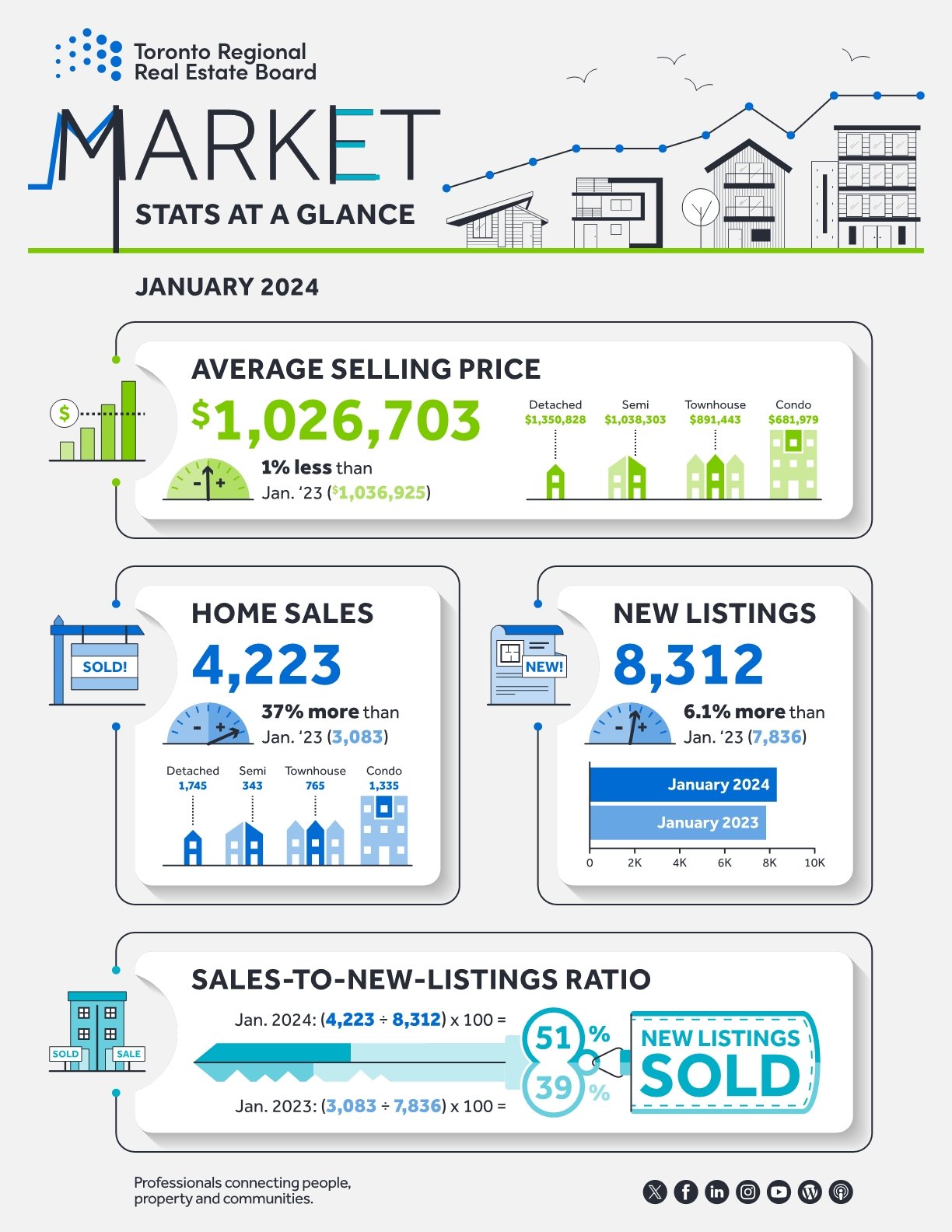
    In a January 2024 report released by the Toronto Regional Real Estate Board (TRREB), it has been highlighted that the housing market in January 2024 showcased tighter conditions compared to the same period in the previous year. With an increase in home sales and new listings, coupled with the expectation of lower borrowing costs in the near future, the real estate landscape is poised for potential renewed price growth as we transition into the spring market.

    According to TRREB President Jennifer Pearce, the positive start to 2024 can be attributed to homebuyers benefiting from lower borrowing costs associated with fixed-rate mortgage products. This, combined with an increase in new listings, albeit at a lesser annual rate compared to sales, has led to tighter market conditions. Pearce emphasized that the Bank of Canada’s expectation of receding inflation throughout the year could support lower interest rates, ultimately bolstering confidence among homebuyers to re-enter the market.

    The data from TRREB’s MLS® System for January 2024 reveals a significant increase in home sales compared to the same period in 2023, with over one-third more sales reported. Similarly, new listings saw an uptick, albeit at a lower annual rate of approximately six percent. This disparity between sales and listings indicates tighter market conditions for buyers compared to the previous year.

    TRREB Chief Market Analyst Jason Mercer predicts that once the Bank of Canada begins cutting its policy rate, likely in the second half of 2024, home sales will further accelerate. With heightened competition among buyers and constrained supply of listings, upward pressure on selling prices is expected over the next two years.

    However, despite the positive outlook, TRREB CEO John DiMichele highlights the need for addressing policy issues at various levels of government. He calls for reflection on the application of the Office of the Superintendent of Financial Institution (OSFI) mortgage stress test, particularly concerning its impact at different points in the interest rate cycle. Additionally, he emphasizes the importance of addressing housing supply issues at the provincial and municipal levels, including building new homes and providing support for first-time homebuyers.

    In conclusion, as TRREB prepares to release its 2024 Market Outlook and Year in Review report, it’s evident that the GTA real estate market is undergoing significant shifts. While tighter market conditions and potential rate cuts by the Bank of Canada may present opportunities for homebuyers, addressing policy challenges remains crucial to ensuring a sustainable and inclusive housing market for all.

    Effect of Possible Rate Cut by BOC Soon:

    The anticipated rate cut by the Bank of Canada in the second half of 2024 is expected to further stimulate the housing market. Lower interest rates would make mortgages more affordable for prospective buyers, thereby potentially increasing demand and putting upward pressure on housing prices. As competition among buyers intensifies and supply remains constrained, the impact of a rate cut could contribute to accelerated price growth in the coming years. However, it’s essential for policymakers to monitor these developments closely and implement measures to ensure a balanced and sustainable housing market.

    If you have any questions or would like to discuss your unique needs and goals, please don’t hesitate to contact me at 416-908-5600. I’m here to help you find the perfect, tailor-made solution.

    If you found this review helpful, I would greatly appreciate it if you could kindly leave a Google Review for my real estate services at

    A. Q. Mufti Google Review

    Thank you for your continued support!

    A. Q. Mufti

    Your Trusted Realtor in Mississauga, Oakville, Milton and beyond.

  • Canada’s Housing Plan – 2024

    Canada’s Housing Plan – 2024

    Canada’s Housing Plan: Addressing the Housing Crisis

    Introduction:

    • In a recent announcement from the Prime Minister’s Office, the Canadian government has unveiled an ambitious plan to address the housing crisis across the country.
    • The plan, titled “Solving the housing crisis: Canada’s Housing Plan,” aims to make housing more affordable and accessible for all Canadians, particularly Millennials and Gen Z, who are facing increasing challenges in finding affordable housing.

    Key Points from the Announcement:

    • Housing Affordability: The government recognizes the challenges faced by Canadians in affording housing, with many spending a significant portion of their income on housing costs. The plan aims to ensure that no hard-working Canadian spends more than 30% of their income on housing.
    • Building New Homes: The plan outlines a strategy to unlock 3.87 million new homes by 2031, including a minimum of 2 million net new homes. The federal government will support the construction of at least 1.2 million new homes, with a call for all orders of government to build an additional 800,000 homes by 2031.
    • Initiatives to Support Homebuilding: Several initiatives are proposed to facilitate the construction of new homes, including the Public Lands for Homes Plan, $15 billion in additional loans for the Apartment Construction Loan Program, and the launch of Canada Builds, a collaborative effort to build affordable homes on under-utilized lands.
    • Supporting Renters and Homeowners: Measures will be implemented to protect tenants against rising rent payments, improve credit scores based on rental payment history, increase the Home Buyers’ Plan withdrawal limit, and extend mortgage amortizations for first-time homebuyers purchasing newly built homes.
    • Affordable Housing and Rental Support: The plan includes funding for the Affordable Housing Fund and the launch of the Canada Rental Protection Fund to protect and expand affordable housing options across the country.
    • Skilled Trade Workforce: Recognizing the need for skilled trades workers in the construction industry, the plan includes investments in apprenticeship opportunities, skilled trades awareness programs, and foreign credential recognition programs.

    Quotes from Government Officials:

    • Prime Minister Justin Trudeau emphasized the importance of restoring fairness for every generation through ambitious action and investments in housing.
    • Deputy Prime Minister and Minister of Finance Chrystia Freeland highlighted the government’s commitment to helping younger Canadians achieve homeownership.
    • Minister of Housing, Infrastructure and Communities Sean Fraser emphasized the need for a collaborative effort to address the housing crisis, involving all levels of government and stakeholders.

    Conclusion:

    • The announcement of Canada’s Housing Plan represents a significant step towards addressing the housing crisis and ensuring that all Canadians have access to safe, affordable housing. Through targeted investments and collaborative efforts, the government aims to build a stronger, more inclusive housing market for future generations.

    If you have any questions or would like to discuss your unique needs and goals, please don’t hesitate to contact me at 416-908-5600. I’m here to help you find the perfect, tailor-made solution.

    If you found this review helpful, I would greatly appreciate it if you could kindly leave a Google Review for my real estate services at

    A. Q. Mufti Google Review

    Thank you for your continued support!

    A. Q. Mufti

    Your Trusted Realtor in Mississauga, Oakville, Milton and beyond.

A. Q. Mufti, REALTOR® — Mississauga, Oakville, Milton and the GTA49 Google reviews
Let's Connect!