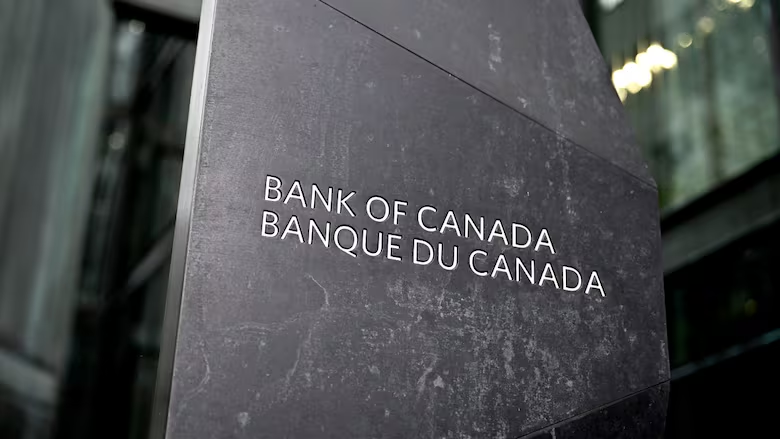
On June 1, 2022, the Bank of Canada (BOC) announced its second interest rate increase of 50 basis points. This was what most analysts were expecting. The move brought the rate to 1.5%. Analysts also expected the BOC to keep raising rates for some time to come.
This post was first published in June 2022. The figures below are from that time.
Inside the June 1, 2022 interest rate increase
A half-point move is large by central bank standards. Most rate changes are a quarter point. So two half-point moves in a row sent a strong message. The Bank of Canada wanted to cool inflation, and it wanted to act quickly.
For borrowers, each interest rate increase flows through to lenders. Variable-rate mortgages and lines of credit usually feel it first. Meanwhile, new buyers see it in the rates they qualify for. As a result, the same budget buys less home than it did a few months earlier.
Why inflation pushed the Bank to act
The world economy continued to slow down. Rising energy and food prices were driving that slowdown. They were also helping inflation spread more widely around the world.
Here at home, the Canadian Consumer Price Index (CPI) touched 6.8% in April 2022. That was well above the BOC’s forecast. The majority of CPI categories (70%) showed inflation above 3%. Meanwhile, the core categories showed inflation in the range of 3.2% to 5.1%.
We are living in a global village, and our economies are connected. Events on the far side of the planet can hit us hard at home. For example, the Russian invasion of Ukraine and COVID-19 lockdowns were disrupting the world supply chain. Both were slowing economies and adding to inflation. So another interest rate increase came as no surprise.
The good news in the Canadian economy
There was good news too. The Canadian economy was running in excess demand. Businesses were reporting a shortage of workers. Also, the housing market was easing off after touching its peak recently.
According to the BOC, robust consumer spending, along with exports, was gaining momentum. It also expected second-quarter growth to be strong. In other words, the economy looked strong enough to handle another interest rate increase.
According to subject experts, the BOC was looking to continue its rate increases until it reached its inflation target of 2%. That meant borrowers had to plan for higher costs for a while.
A strong job market helps many families carry a higher payment. Still, not everyone is in the same spot. First-time buyers, people with large debts and those near renewal often feel rate changes the most. So a careful budget matters more when rates are rising.
What an interest rate increase means for you
So, looking at the forecast on rates, the common question is WIFM, or “What’s In It For Me?”
There are always two sides to a coin. On one side, an interest rate increase affects the borrowing power of home buyers. It limits the maximum price they can pay for their dream home.
On the other hand, home prices were settling down after a period of craziness in the market. The rise had been due to the natural supply and demand scenario. But in my opinion, multiple blind bidding contributed to the artificial increase in home prices. A calmer market gives buyers more time to think, compare and negotiate.
Sellers also feel the shift. Fewer buyers may compete for each home. As a result, pricing well from day one matters more than before. A home that is clean, well presented and priced right still attracts serious buyers in a slower market.
Should you buy now or sell your home?
The big question remains: is it time to buy now or sell your home? The honest answer depends on your plans, your finances and your timeline. Here are some practical steps:
- Buyers should get a fresh pre-approval, because the amount you qualify for can change after an interest rate increase.
- Sellers should price with today’s buyers in mind, not last spring’s bidding wars.
- If you plan to buy and sell, think about which to do first, and have a plan for both.
- Homeowners renewing soon should talk to their lender early about their options.
To see how the market reacted, read my review of the TRREB sales report for May 2022. To plan around future decisions, see how often the Bank of Canada announces its rate decisions. Rates have moved a great deal since 2022, so always check the latest before you decide.
Talk to a Mississauga real estate agent
Do you have questions about buying, selling or planning your next move? I am happy to help. You can reach me through my contact page or call me directly at 416 908 5600. A. Q. Mufti, Sales Representative, RE/MAX Real Estate Centre Inc., Brokerage.
Disclaimer: this article was published on 18 January 2025 and reflects the information available at that time. Interest rates, prices, and government programs change, so check the current position before acting on anything here. It is provided for information only and is not financial, mortgage, tax or legal advice. A. Q. Mufti is a registered Sales Representative with RE/MAX Real Estate Centre Inc., Brokerage, Ontario, Canada.